Transformation · Healthcare

Narrowing a village shortlist to the ones that can actually support a clinic.

A rural healthcare company runs e-clinics out of village service centres, with pharmacy and diagnostic partners attached. Every candidate village was assessed on demand and infrastructure, and the shortlist was cut to the few that can sustain a clinic.
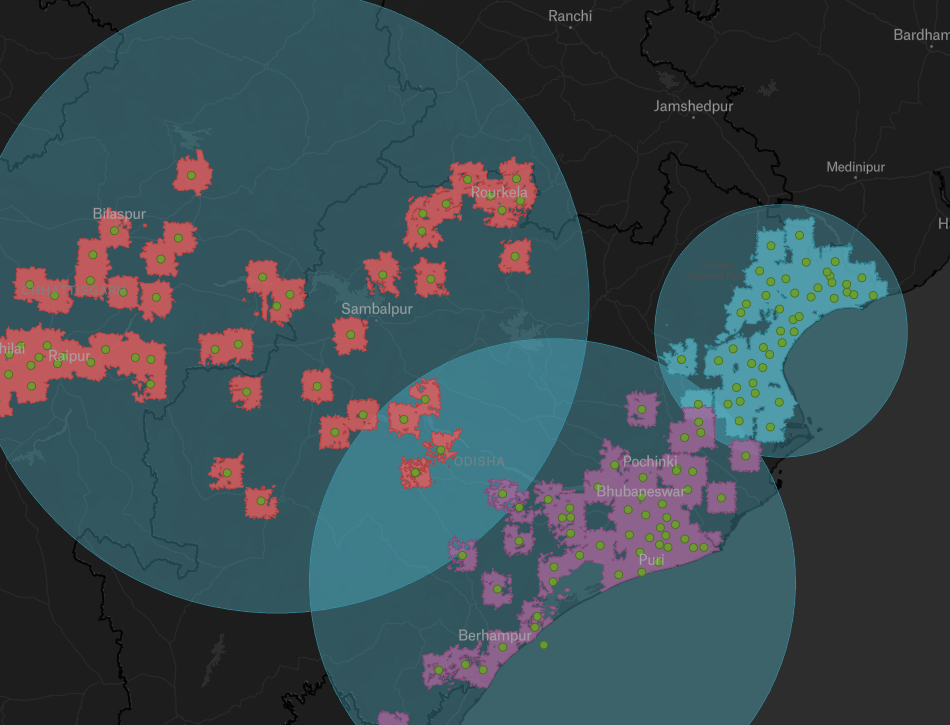
Rural e-clinics
Village service centres
Pharmacy and diagnostic partners
Shortlist against market potential

What the screen produced

A shortlist the company could not rank, reduced to a list it could build against.

864
Observed
Village councils on the company's original expansion shortlist.
105
Observed
Councils that cleared the framework and entered the build plan.
90
Scope
Clinic sites under the site selection engagement.
9
Scope
Districts covered by the district-level partner mapping.

The case

01 · A shortlist without a rank

Eight hundred candidates, no order

The company knew which villages it could reach. Nothing in that list said which ones would support a clinic that pays for itself.

02 · Need and viability diverge

The places with the worst access are often the hardest to serve

A village can need care badly and still lack the population, the income and the road to sustain a site. Treating those as one question produces sites that close.

03 · A clinic is half the network

Fulfilment depends on partners nearby

A consultation ends in a prescription and a test. Without a pharmacy and a diagnostic partner within reach, the clinic cannot complete what it starts.

Four kinds of village, and only one of them gets a clinic

The framework ran as an algorithm across the full shortlist and returned a reason for every council, including the ones it rejected. That reason is what let the company argue with the output instead of accepting it.

Underserved and viable
105 councils
Market potential and the readiness to support a sustainable clinic, with no site currently addressing it. This is the build list.
Action
Site a clinic here
Commercially strong, wrong fit
Ruled out
A real commercial opportunity that does not match a rural service model. Serving it well would require a different format.
Action
Exclude from this plan
Deprioritised
Held back
Potential present and weaker than the councils above it, so the market waits rather than being dropped.
Action
Revisit after the first wave
Access-poor and unsustainable
Excluded
Very low access, where a chain run for profitability cannot hold a site. The framework says this plainly rather than leaving it for a closure to demonstrate.
Action
Serve another way, or not at all

What was scored

Signals about the catchment, and signals about the healthcare ecosystem already inside it. One candidate pharmacy in the delivered set carried the profile below.

Catchment population

Approximately 465,700 residents inside the catchment drawn around the site.

Sets the ceiling on patient volume, which is the first constraint on whether a site can ever reach break-even.

Local competition

One competing pharmacy within a hundred metres.

A partner with few immediate rivals holds the local relationship, which is what the network is actually recruiting.

Healthcare ecosystem density

94 hospitals, 170 clinics and 68 diagnostic centres within reach of the site.

Prescription and referral flow both depend on what already exists nearby, so ecosystem density is a demand signal rather than a competition signal.

Public reputation

Average public rating and review volume for each candidate partner.

Separates a trusted local business from one that is merely present, which matters when the partner carries the network's name locally.

Every one of those figures describes the partner's own market. That is the reason the profile works as a recruitment document as well as a scoring one.

Three deliverables, three different units

Each answers a separate question, and each is priced and delivered per unit rather than as a report.

Deliverable
What it contains
Action
Site selection, per clinic
Coordinates and the streets around specific landmarks that make optimal clinic locations, with the reference data behind each.
Sign the lease here
Demand partner list, per clinic
Candidate partners matching agreed personas, with name, location, address, public reviews and contact detail where it is generally available.
Recruit around each site
Supply partner list, per district
An enriched and scored list built against the company's own stated operating procedure rather than a generic profile.
Prioritise district supply relationships

What each team received

One scored network, abstracted for each level.

Expansion leadership

A ranked build list

The qualifying councils with a stated reason for each, and the rejected ones with a stated reason as well, so the plan can be challenged on its logic.

Partnership teams

A page per candidate partner

Each candidate receives a document stating the size of its catchment, the competing pharmacies within a hundred metres, its public rating and the healthcare facilities nearby. The recruiter opens with the partner's own market rather than with a pitch.

Operations

Clinics tracked against their markets

Under the monitoring phase, clinics, field staff, customers and partners mapped together with performance indicators, so a weak site can be separated from a weak market.
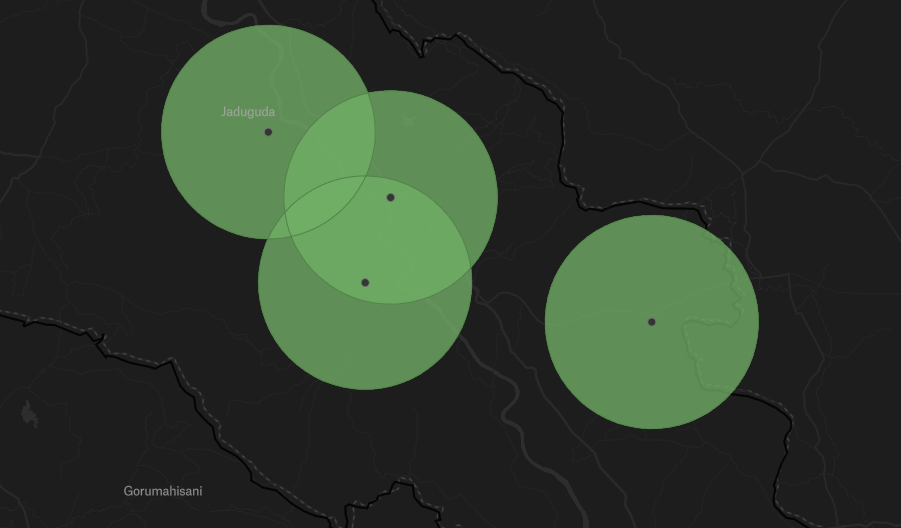
The partner one-pager as delivered

How the workflow changed

Before
Expansion shortlist held as a flat list of candidate villages
Access and commercial viability treated as one question
Partner recruitment run village by village on arrival
Rejection of a market left unexplained
Site performance judged without a market benchmark
→
After
Every council classified with a stated reason
Viability scored separately from need
Named partner candidates delivered per clinic before the visit
Exclusions defensible and open to challenge
Performance tracked against the market each site sits in

How the engagement is staged

Selection and proof are contracted separately, and only the first is delivered from public signals alone.

Phase one
Site and partner selection.
One-time
Structure
Delivered per unit, ninety clinic sites and nine district partner lists, each priced as a unit rather than bundled into a retainer.
Phase two
Monitoring the sites once they are open.
Four months
Structure
A separate agreement covering interventions, a data exchange format and a review cadence, with tracked outcomes as the deliverable.
Obligation
Monitoring needs the company's own numbers.
Committed
Structure
The client commits to data sharing and review meetings in the agreement itself, because performance cannot be attributed without them.
Siting a clinic takes about three to four weeks of field work and surveys. Now our team works with a ready list and with a much higher probability of success. Expansion that would take years can now happen in months.
CXO
In charge of expansion

Rank one district of your shortlist.

Send the candidate villages for a single district. We will classify each one with a stated reason and name the pharmacy and diagnostic partners around the sites that qualify.

Set up a workshopMore Transformation Examples